 |
 |
 |
 |
Very much in tune with these trends, the whole idea of zeroing on a hinge is governed by various factors. Experts suggest that it's important to take cost-effectiveness, visual appeal, and the type of door into consideration before selecting a hinge. Apart from this, there are some questions that one should ponder upon. For instance, what is the frequency with which people enter a building, or, how many times a door will be opened or closed in a day? Is the door wooden or metallic? In which section of the house/building is the door located? Is there a likelihood of the door would be removed in the future? What is the durability and the thrust-bearing capacity of the door?.....and so on… MGS Architecture sheds light on some of them.
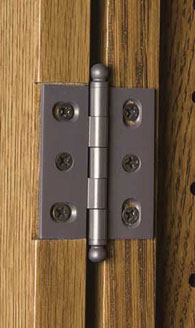
Butt Hinges
When it comes to door hardware, perhaps the omnipresent Butt Hinge tops the list. In these hinges, there are two leaves, wherein one is connected to the door and the other to the jamb. Due to their various attributes such as usefulness, suitability to most doors, simplicity, and durability, these hinges, for generations, have been a mass favourite.Within the Butt Hinge, there are three basic categories; Ball Bearing, Security, and Rising.
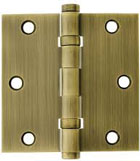
Security Butt Hinges are meant for those wooden doors which are exposed to outside. These hinges work on a remarkable mechanism wherein the door is locked once it's closed. No wonder, the name Security Hinge!
Rising Butt Hinges are designed to lift a door as it opens. Available in clockwise and anticlockwise types, this variant is also ideal for wooden doors.
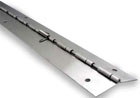
Piano Hinges
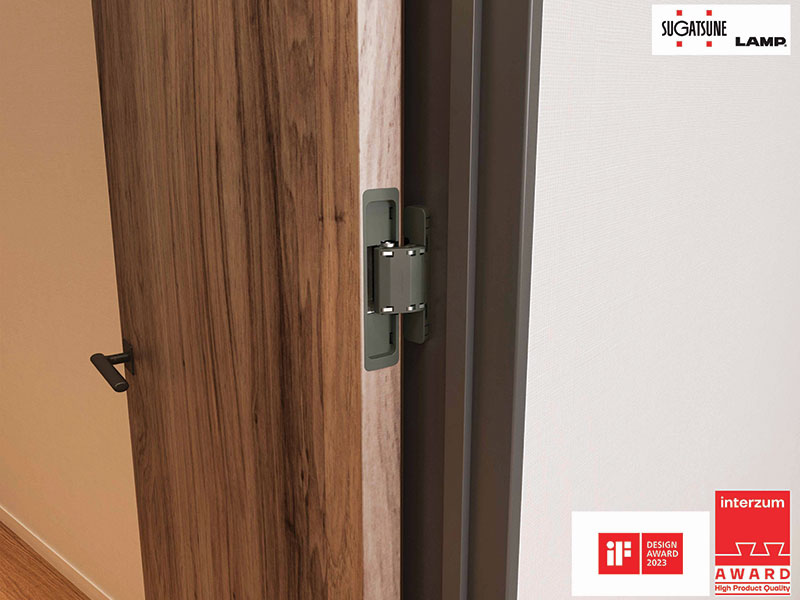
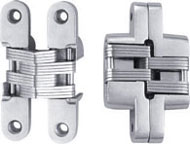
Concealed Hinges
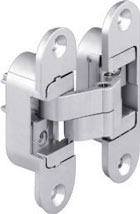
More often than not, hinges leave scars on the door surface if they are removed. Concealed hinges, on the contrary, can be removed and adjusted with ease without defacing the exterior thereby maintaining the overall textural appeal.